
Independent marine surveyors & cargo inspection at U.S. ports
24/7 Survey Inquiries: 404-390-2132 | info@amicamarine.com
Surveyor attendance at major U.S. ports: Houston, Corpus Christi, Beaumont, Lake Charles, the Lower Mississippi River, Mobile, Los Angeles, Long Beach, Hampton Roads and New York–New Jersey, with port knowledge that shapes every survey plan.
Amica Marine coordinates surveyor attendance at major U.S. seaports, including Houston, Galveston, Texas City, Freeport, Corpus Christi, Beaumont, Port Arthur, Lake Charles, the Lower Mississippi River from Baton Rouge to the Gulf, and Mobile.
Amica Marine provides marine surveyors at U.S. ports. The Gulf Coast concentrates much of the country’s refining, petrochemical production, crude oil and LNG exports, grain exports and steel imports, so it is where most international principals need independent surveys on U.S. port calls.
Each port differs in terminals, cargoes, pilotage, anchorages and seasonal conditions. Knowing these details helps us plan attendance, set realistic boarding times and anticipate the measurement issues that affect bunker, draft and tanker surveys.
This page summarizes the ports where we coordinate attendance and the surveys most often requested at each. Survey inquiries are answered 24/7 at 404-390-2132 and info@amicamarine.com.
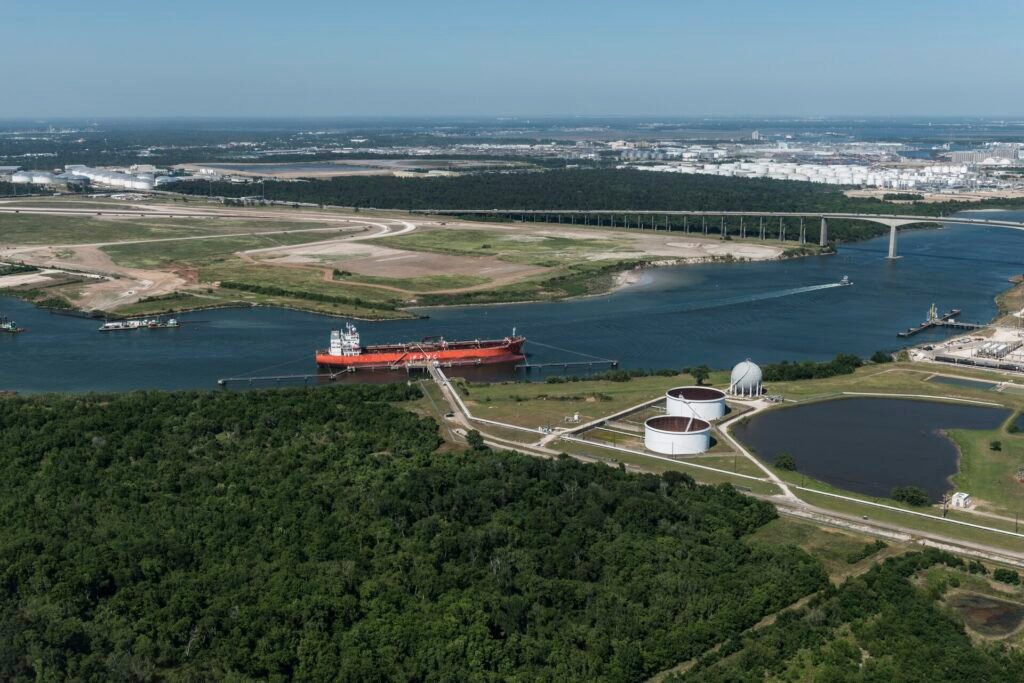
Texas ports handle crude oil, refined products, chemicals, LNG, grain, steel, containers and project cargo. Amica Marine coordinates surveys along the Houston Ship Channel and Galveston Bay, at Freeport and Texas City, Corpus Christi and Ingleside, the Sabine-Neches Waterway, Brownsville and Point Comfort.
Port Houston and the private terminals along the roughly 50-mile Houston Ship Channel form one of the busiest port complexes in the United States by tonnage and one of the largest petrochemical centers in the world. Bayport and Barbours Cut handle containers; the City Docks and Turning Basin terminals handle steel, breakbulk and project cargo; private docks handle crude oil, products and chemicals. Common surveys: tanker and chemical cargo, bunker, steel and project cargo, cargo damage and P&I.
The Port of Galveston handles ro-ro, breakbulk and bulk cargo, and Galveston Bay anchorages are used for bunkering and waiting. Texas City is a refining and petrochemical hub with its own ship channel. Pilotage is provided by the Galveston-Texas City Pilots.
Port Freeport serves containers, vehicles and project cargo, alongside a large chemical complex and an LNG export terminal on Quintana Island. Chemical cargo, tanker and cargo damage surveys are common.
The Port of Corpus Christi is the leading U.S. port for crude oil exports, with terminals in the Inner Harbor and at Ingleside, as well as LNG exports, a public grain elevator and wind component handling. Tanker cargo surveys with OBQ and ROB, bunker surveys and project cargo surveys are frequent.
The Sabine-Neches Waterway serves major refineries, crude and product terminals, petroleum coke docks, the Port of Beaumont’s project and military cargo, and the Sabine Pass LNG export terminal.
The Port of Brownsville handles steel, liquid bulk and is a center of U.S. ship recycling. Point Comfort on Lavaca Bay serves a large plastics and petrochemical complex.
Louisiana ports include the Port of New Orleans, the Port of South Louisiana, Baton Rouge, Plaquemines, Gramercy and St. James on the Mississippi River, plus Lake Charles and Port Fourchon. Cargoes include grain, coal, crude oil, products, chemicals, LNG, steel and containers.
Port NOLA handles containers at the Napoleon Avenue terminal and breakbulk such as steel, rubber and forest products at its river terminals. Cargo damage, steel discharge and container surveys are common.
The Port of South Louisiana covers the Mississippi River between New Orleans and Baton Rouge in St. Charles, St. John the Baptist and St. James parishes, and is among the largest tonnage port districts in the Western Hemisphere. Grain elevators, chemical plants, crude oil terminals and midstream buoys line this stretch. Draft surveys, hold inspections and tanker and chemical surveys are frequent.
The Port of Greater Baton Rouge marks the head of deep-draft navigation on the Mississippi and serves refining, chemicals, grain and bulk cargo.
Plaquemines Port, below New Orleans, handles coal and other bulk and is home to LNG export development. Gramercy has industrial and bulk terminals, and St. James is a major crude oil storage and terminal hub.
Lake Charles, on the Calcasieu Ship Channel, serves refineries, LNG export terminals and bulk cargo. Port Fourchon is the main service base for the offshore oil and gas industry in the Gulf, where vessel condition surveys for offshore support vessels are common.
Pilotage on the river is provided by the Associated Branch Pilots, the Crescent River Port Pilots and the New Orleans–Baton Rouge Steamship Pilots. River stage, current and high-water periods affect berthing, draft readings and boarding by launch.
Alabama port surveys center on Mobile, where the Alabama State Port Authority handles coal exports, steel imports, forest products, containers and project cargo, and on the Theodore Industrial Canal, which serves chemical and industrial facilities on the west side of Mobile Bay.
The Port of Mobile includes the McDuffie Coal Terminal, one of the largest coal export terminals in the United States, steel terminals supplying regional mills, forest product facilities and the APM Terminals container terminal. Draft surveys for coal, steel cargo condition and tally surveys, and bunker and condition surveys are the most frequent requests.
Theodore, south of Mobile on the bay, has industrial and chemical facilities served by the Theodore Industrial Canal. Pilotage in Mobile Bay is provided by the Mobile Bar Pilots, and fog and high winds can affect the bay approach and boarding times.
This table summarizes the main U.S. port areas, the cargoes they handle, the surveys most often requested and the planning points that affect attendance. It is a guide for principals planning a vessel call; specific terminals and berths are confirmed when you send the vessel details.
| Port | Main cargoes | Typical surveys | Planning notes |
|---|---|---|---|
| Houston / Galveston Bay | Crude oil, refined products, chemicals, containers, steel, project cargo, petcoke, grain | Tanker, chemical, bunker, steel and project cargo, cargo damage, P&I | Long channel transit, multi-berth calls, fog closures; Houston Pilots and Galveston-Texas City Pilots |
| Freeport / Texas City | Chemicals, refined products, LNG, containers, vehicles | Chemical cargo, tanker cargo, bunker, cargo damage | Terminal security and site training required at chemical docks |
| Corpus Christi / Ingleside | Crude oil and condensate, LNG, grain, aggregates, wind components | Tanker cargo, OBQ/ROB, bunker, draft, project cargo | Meter-based shore figures; reverse lightering offshore; Aransas-Corpus Christi Pilots |
| Beaumont / Port Arthur / Sabine Pass | Crude oil, products, LNG, petcoke, project and military cargo | Tanker cargo, bunker, dry bulk, project cargo, H&M | Sabine-Neches Waterway traffic; Sabine Pilots |
| Lake Charles | Refined products, LNG, petcoke, bulk | Tanker cargo, bunker, dry bulk, condition | Calcasieu Ship Channel; Lake Charles Pilots |
| Lower Mississippi River | Grain, coal, crude oil, products, chemicals, steel, containers | Draft, hold inspection, tanker, chemical, cargo damage, P&I | Three pilot associations, river current, high water, midstream buoys |
| Mobile / Theodore | Coal, steel, forest products, containers, chemicals | Draft, dry bulk, steel cargo damage, bunker, condition | Mobile Bar Pilots; bay approach in poor visibility |
| Los Angeles / Long Beach | Containers, crude oil, refined products, vehicles, petcoke, breakbulk | Container cargo damage, bunker, tanker, condition | Busiest U.S. container complex; anchorage bunkering; LA and Jacobsen pilots |
| Hampton Roads (Norfolk, Portsmouth, Newport News) | Containers, coal, breakbulk, vehicles | Draft, hold inspection, cargo damage, bunker, condition | Major coal export gateway; Virginia Pilot Association |
| New York–New Jersey | Containers, petroleum products, chemicals, vehicles, breakbulk | Container cargo damage, bunker, tanker, P&I | Port Newark and Elizabeth are in New Jersey; Sandy Hook Pilots |
Beyond the Gulf Coast, Amica Marine coordinates surveyor attendance at the San Pedro Bay ports of Los Angeles and Long Beach, the Port of Virginia in Hampton Roads, and the Port of New York and New Jersey, where container, bunker, coal, liquid bulk and breakbulk surveys are common.
The San Pedro Bay port complex of Los Angeles and Long Beach is the busiest container gateway in the United States and a major West Coast bunkering location. Terminals also handle crude oil and refined products for Southern California refineries, vehicles, breakbulk and dry bulk such as petroleum coke. Container cargo damage, bunker, tanker and condition surveys are the most frequent requests. Pilotage is provided by the Los Angeles Pilot Service and the Jacobsen Pilot Service in Long Beach, and anchorage bunkering depends on launch and weather conditions.
The Port of Virginia operates container terminals at Norfolk International Terminals, Virginia International Gateway in Portsmouth and Newport News Marine Terminal. Hampton Roads is also one of the largest coal export gateways in the United States, through terminals at Lambert’s Point in Norfolk and in Newport News. Draft surveys and hold inspections for coal, container and breakbulk damage surveys, bunker surveys and condition surveys are typical. Pilotage is provided by the Virginia Pilot Association.
The Port of New York and New Jersey is the largest container port on the U.S. East Coast. Its main container terminals at Port Newark and Port Elizabeth are in New Jersey, with further terminals in Bayonne, at Staten Island and in Brooklyn in New York. Liquid bulk terminals along the Kill Van Kull and Arthur Kill handle petroleum products and chemicals, and New York Harbor is a major bunkering location. Container cargo damage, bunker, tanker and P&I surveys are common. Pilotage is provided by the Sandy Hook Pilots.
Survey logistics differ between these ports, including terminal security, TWIC credentials and launch access to anchorages. We confirm the arrangements when you send the vessel details.
Arrange a surveyor by sending the vessel name, IMO number, port, terminal or anchorage, ETA and survey type to info@amicamarine.com or calling 404-390-2132. We confirm scope and quotation, coordinate access with the agent and terminal, and attend on written instruction.
These answers cover what principals most often ask about where Amica Marine attends and how port conditions affect survey planning on the U.S. Gulf Coast. For a specific vessel call, contact us 24/7 at 404-390-2132 or info@amicamarine.com.
Yes. We coordinate surveyor attendance at Houston, Galveston, Texas City, Freeport and Corpus Christi, together with other major U.S. ports. Send the vessel details and we confirm timing.
Yes, subject to launch availability and river conditions. Midstream and anchorage attendance requires boarding arrangements with the agent and launch operator, which we confirm before instruction.
LNG carrier attendance is assessed case by case because of specialized cargo measurement and terminal requirements. Contact us with the vessel and terminal and we confirm what can be provided.
As much as possible, ideally when the ETA is fixed. We also handle short-notice requests 24/7; call 404-390-2132 for urgent attendance.
Yes, for suitable scopes such as vessel condition and on-hire or off-hire surveys of offshore support vessels. Send the vessel and berth details for confirmation.
Send the vessel name, port, ETA and survey type. We respond to survey inquiries 24/7 and coordinate surveyor attendance at major U.S. seaports on the Gulf, Atlantic and Pacific coasts.