
Independent marine surveyors & cargo inspection at U.S. ports
Survey requests, around the clock: +1 979-250-7486 | info@amicamarine.com
Bunker, tanker, chemical, P&I and cargo surveys for vessels at Houston Ship Channel terminals and Galveston Bay anchorages.
The Houston Ship Channel runs from the Gulf of Mexico through Galveston Bay to the turning basin near downtown Houston, past one of the largest concentrations of refineries and petrochemical plants in the world. A single vessel call can involve a crude or product parcel, a chemical cargo, bunkers taken at anchorage and a berth window that moves by the hour.
Requests for Houston usually come from owners and charterers who need bunker or on-hire figures, cargo interests who want an independent record of a tanker or chemical parcel, and P&I clubs responding to a cargo or stevedore claim at the container or breakbulk terminals.
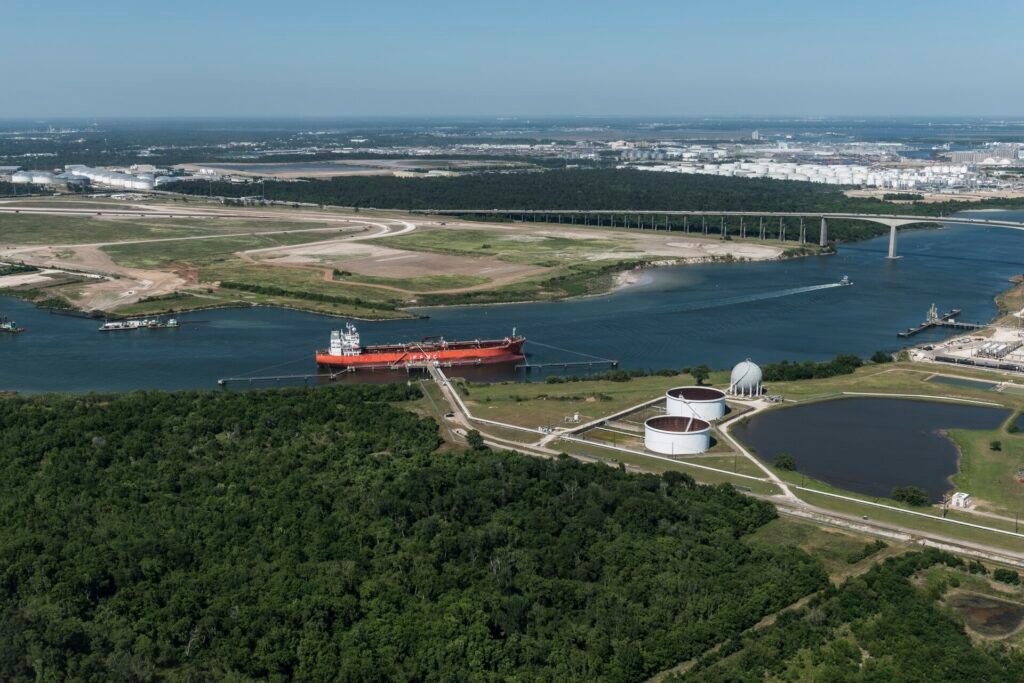
Port Houston operates the public terminals, including the Barbours Cut and Bayport container terminals and the Turning Basin general cargo terminals. Private terminals line the channel and handle most liquid bulk and chemical cargo. Vessels typically wait at the Galveston Bay or offshore anchorages before transiting with Houston pilots.
Source for port facts: Port Houston. Check terminal and channel notices with the port and your agent before arrival.
Each appointment is matched to a surveyor approved for the survey type. Availability for your date is confirmed in writing before you approve.
Quantity and ROB surveys at Galveston Bay anchorages and channel berths.
Ullage, OBQ and ROB and ship-shore reconciliation at channel terminals.
Houston cargoes are often sold, blended or transshipped, so the figures recorded here end up in more than one contract. An independent surveyor gives you a set of figures and observations that are not the terminal’s or the supplier’s. On the container and breakbulk side, damage that is not recorded before the cargo leaves the terminal is difficult to attribute later.
Amica Marine does not have an office at Houston and does not claim surveyors are stationed at every terminal. When a request arrives we check which approved independent surveyors can attend the berth or anchorage on the date required, confirm their experience for the survey type, and only then quote. If we cannot cover the date, we tell you promptly.
Owners, charterers, traders, chemical cargo interests, P&I clubs and correspondents, and bunker suppliers. Instructions also come through agents, brokers and law firms acting for these parties. See who we serve and guidance for international clients.
Depending on scope: figures with their corrections and tables, a sampling record, dated photographs, the documents reviewed and the limitations of the survey. How reports are prepared.
For bunkering at Galveston Bay anchorage, send the supplier, barge name and delivery window with the request.
Yes, subject to launch availability and weather. Launch costs are shown separately in the quotation.
As early as the ETA is known. Short-notice requests are reviewed as they arrive; the earliest confirmed time is stated before you approve.
Yes, where the surveyor is approved for both and the vessel’s schedule allows. Combining them reduces boarding costs.
Requests for Texas City, Galveston and Freeport are handled the same way; coverage is confirmed per appointment.
Ships bound for Houston make landfall off Galveston, embark a Houston pilot near the sea buoy and enter through Bolivar Roads, the gap between Galveston Island and the Bolivar Peninsula. From there the Houston Ship Channel runs roughly fifty miles across Galveston Bay and up the old course of Buffalo Bayou to the Turning Basin, past Bayport, Barbours Cut, the refinery docks of Pasadena and Deer Park, and the public terminals near the city. Traffic is monitored by the Coast Guard’s Vessel Traffic Service Houston-Galveston, and large tankers and container ships meeting in the narrower reaches follow passing rules agreed with the pilots. A multi-year deepening and widening program is under way, so draft and beam limits for a given berth should always be confirmed with the agent.
For survey planning, the practical points are distance and weather. A berth at the Turning Basin can be two to three hours by road from Galveston anchorage, and transit times up the channel vary with traffic and daylight restrictions for larger ships. Winter and spring sea fog can close the channel for hours, holding vessels at anchor and shifting berthing windows; summer brings thunderstorms and, in the hurricane season from June to November, port condition changes set by the Captain of the Port. Survey timing on Houston calls is therefore confirmed against the pilot order, not just the ETA.
Navigation details change with dredging, construction and seasonal restrictions. Always confirm current conditions with the pilots, the port authority, local notices to mariners and your agent.
Requests are read around the clock. Attendance is confirmed case by case.
Urgent, vessel alongside?
+1 979-250-7486
WhatsApp +1 979-250-7486
Vessel, port and survey type are enough to start. Details and documents can follow.